How We Explore Strange Things in Space

May always feels like a month of beginnings — longer evenings, brighter skies, and the first hints of summer. And this year, the night sky is giving us plenty to look forward to.

The Eta‑Aquariid meteor shower peaks on the 6th, skimming low across the pre‑dawn horizon. Venus reaches its highest evening altitude on the 14th, bright enough to cut through the twilight. And on the 19th and 20th, the Moon will slip past Venus and Jupiter in a pair of close approaches that should make the western sky feel unusually alive.

Even without full darkness this time of year, these moments are reminders of how much we learn simply by watching — by paying attention to light, motion, and timing.

And that’s been the theme of my writing recently: learning how we actually study strange things in space.
Not the dramatic, cinematic version — the real tools.
I’ve been diving into the methods scientists use to understand objects we’ve never touched and asked how:

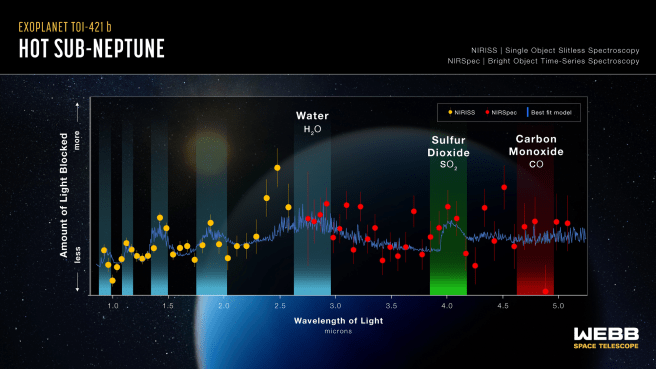
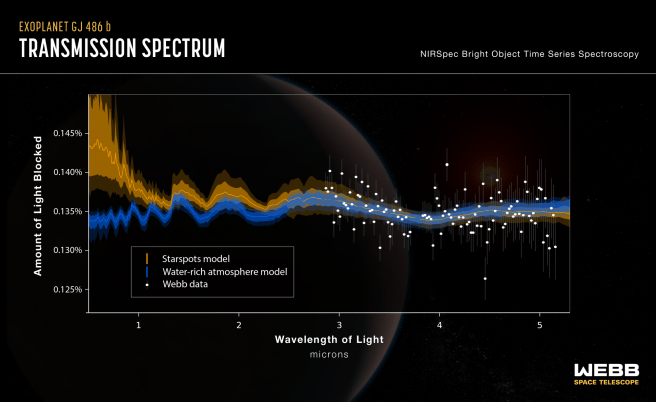
  1. A spectrum reveals composition, temperature, and motion
  2. Radiometric scanners pick up narrowband spikes that shouldn’t exist
  3. Synthetic‑aperture radar can map internal cavities
  4. Isotopic ratios betray an object’s origin
  5. Long‑baseline tracking shows when something isn’t following a natural path

None of this appears directly on the page when I’m drafting scenes.

But it shapes the way I think.
It’s the difference between writing “a strange object appeared” and writing something that feels like it passed through real instruments, real analysis, real uncertainty. It’s the approach I’ve always admired in The Expanse and in Andy Weir’s work — stories where the tools matter, and where the characters understand the universe by measuring it.
The more I learn, the more I appreciate the quiet skill behind it all: the ability to look at a handful of photons and say, “There’s something odd here.”

All this research has also nudged me into building something of my own — a little navigation tool that helps me keep my fictional universe honest. But that’s a story for next month.
For now, I’m simply looking forward to the sky this May, and to learning a little more about how we explore the unknown.

— Graydon

Astronomy data sources: Royal Observatory Greenwich, UK Meteor Network, and UK‑based planetary alignment forecasts.
From The Martian to Project Hail Mary

Back in September 2022, I wrote about Andy Weir after hearing him speak during ProWritingAid’s Writer’s Week. His interview stood out to me not just because The Martian is one of my all-time favourite stories, but because of how down-to-earth he came across. Despite his book ‘rocketing’ to success, Andy spoke with humour and humility, sharing how social media helped propel his work before a major publisher picked it up.
I was struck by his approach to research, which mirrors my own: keep the story internally consistent, even if the science bends a little. As he explained, the ferocious Martian storm that stranded Mark Watney couldn’t happen in reality, but it made for a brilliant opening. As Slartibartfast would say, “I’d rather be happy than be right any day.”
At the time, Andy admitted his follow-up novel Artemis hadn’t resonated with readers in the same way, partly because the protagonist wasn’t wholly likeable. I hadn’t read it myself, but I understood his point—sometimes a character can push us away before the story has a chance to pull us in.

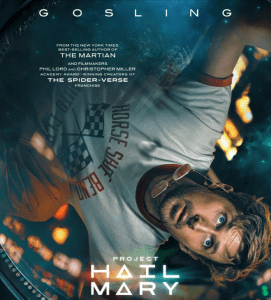
Fast forward to now, and I’ve finally read Project Hail Mary. It was brilliant. The format and feel reminded me of The Martian—that same mix of humour, tension, and science-driven storytelling—but with its own fresh spark. I couldn’t help imagining Tom Hanks in the lead role, a cross between his Cast Away survivor and Matt Damon’s stranded botanist in The Martian. No offence to Ryan Gosling, who’s set to star in the film adaptation, but Hanks feels like such a natural fit for the lone astronaut.
What makes Project Hail Mary so good is exactly what Andy talked about back in 2022: believable science wrapped in compelling storytelling, with a protagonist readers can root for. It feels like a return to the hit writing that made The Martian such a success.
Looking back, I’m glad I put this book on my reading list. Andy Weir has proven once again that when you combine technical curiosity with a spark of imagination, you can create a story that captures readers and keeps them turning the pages.

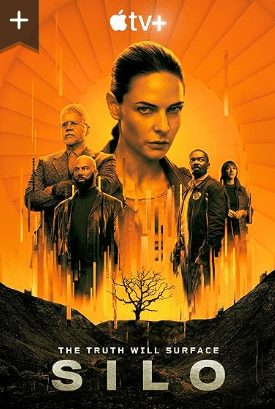
Silo (2023- )

What about Silo on Apple TV? I’d not heard of the novels, but once we re-subscribed to Apple TV, this was the 10th item on our list of things to watch. Yes, I enjoyed Foundation, and maybe I would have written about that had I not been releasing The Unicorn from space while we completed the first two seasons. But I didn’t, and, to be fair, as brilliant as it was, if I had to write about one thing this year, I think it would be Silo.

The actors:

Two of my favourites, Tim Robbins and Iain Glen were, as you’d expect, brilliant. Though I wasn’t sure about the latter’s US accent. The Star, Rebecca Ferguson, shines too, depicting someone thrust unexpectedly into an adventure that they probably didn’t expect but were probably ready to go the distance – no matter the cost.

My favourite characters are Paul Billings, played by Chinaza Uche and Common (the wrapper) who plays Robert Sims, from ‘Judicial’, with a low voice that reminded me of Vin Deisel. I also enjoyed Rick Gomez’s character, Patrick Kennedy, who I would have liked to have seen more of. Finally, Dame Harriet Walker… Is she going to sit on the list that contains Dame Judi Dench, and Dame Maggie Smith as a British treasure? What do you think?

The story:

Without giving up any spoilers, the story starts with two other characters who set the scene, and immediately start you guessing how it all ends. Yes, you do have to suspend a certain amount of disbelief, but this is fiction. I mentioned Isaac Asimov’s Foundation, and that is, without a doubt, brilliant. Very twisty-turny and complex. And I will get around to reviewing it. However, I liked Silo because, even though I first dismissed it as something like the 2008 Film, City of Embers, featuring Bill Murray (sorry, there were many other actors in this, but you can’t forget Bill, can you?) It struck that middle ground that hit the spot for me. Not too long, too complex, and with a twist or two to make it not as predictable as you might think. From the get-go, it had us guessing what the finale would reveal. All I’ll say is that we were not disappointed, and at the same time… let’s just say there are 3 novels.