Having seen Project Hail Mary

I watched Project Hail Mary recently, and it reminded me how much the science matters in certain kinds of science fiction. The film is enjoyable, but a lot of the sharp, science‑driven detail that made the book so strong didn’t make it to the screen. I found myself wondering how well the story lands for anyone who hasn’t read the novel — the Beatles, the nitrogen problem, du Bois, zenonite, Taumeba… all the things that made Andy Weir’s work feel so clear and so clever.

Seeing the adaptation made me appreciate the book even more. Neil deGrasse Tyson once said something along the lines of: real science makes fiction more fun — and that’s exactly how I felt watching it.

And yet, I’ve always loved the softer side of sci‑fi too. Star Wars and Star Trek were part of my childhood: big universes, big ideas, big emotions. They’re not about physics; they’re about wonder. They’re brilliant in their own way.

But I’m not a Weir‑style writer. I’m not building engineering puzzles. My work sits closer to The Expanse — stories where the physics matters, the world behaves properly, and the consequences feel real, but the plot is driven by people, pressure, and the systems they’re caught inside. The science supports the story rather than being the story.

Watching Project Hail Mary reminded me how much I enjoy that balance. When the science is missing, some of the weight goes with it.

I explained a few of the gaps to my wife, and we still enjoyed the film, but if you love sci‑fi, I’d strongly recommend reading the novel. It’s one of those stories where the science is half the adventure.
How We Explore Strange Things in Space

May always feels like a month of beginnings — longer evenings, brighter skies, and the first hints of summer. And this year, the night sky is giving us plenty to look forward to.

The Eta‑Aquariid meteor shower peaks on the 6th, skimming low across the pre‑dawn horizon. Venus reaches its highest evening altitude on the 14th, bright enough to cut through the twilight. And on the 19th and 20th, the Moon will slip past Venus and Jupiter in a pair of close approaches that should make the western sky feel unusually alive.

Even without full darkness this time of year, these moments are reminders of how much we learn simply by watching — by paying attention to light, motion, and timing.

And that’s been the theme of my writing recently: learning how we actually study strange things in space.
Not the dramatic, cinematic version — the real tools.
I’ve been diving into the methods scientists use to understand objects we’ve never touched and asked how:

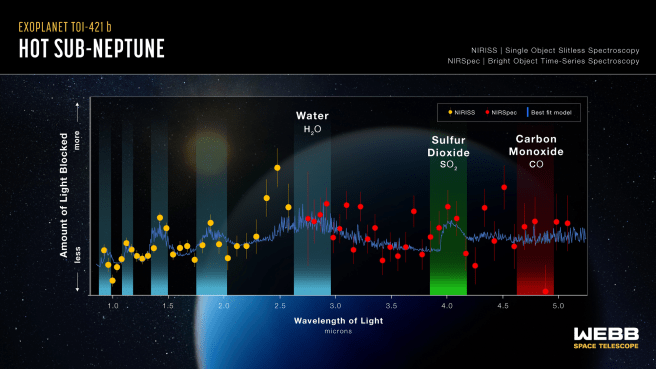
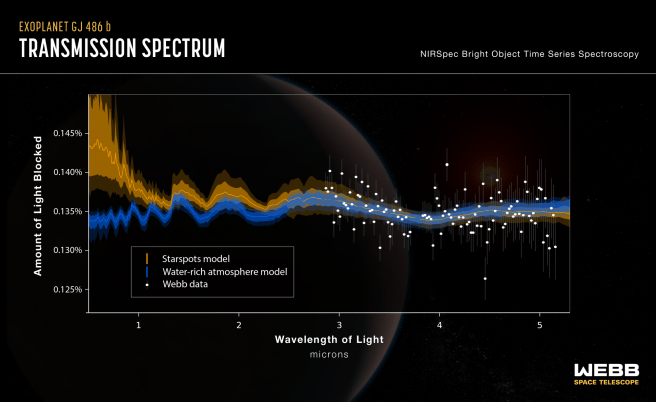
  1. A spectrum reveals composition, temperature, and motion
  2. Radiometric scanners pick up narrowband spikes that shouldn’t exist
  3. Synthetic‑aperture radar can map internal cavities
  4. Isotopic ratios betray an object’s origin
  5. Long‑baseline tracking shows when something isn’t following a natural path


None of this appears directly on the page when I’m drafting scenes.

But it shapes the way I think.
It’s the difference between writing “a strange object appeared” and writing something that feels like it passed through real instruments, real analysis, real uncertainty. It’s the approach I’ve always admired in The Expanse and in Andy Weir’s work — stories where the tools matter, and where the characters understand the universe by measuring it.
The more I learn, the more I appreciate the quiet skill behind it all: the ability to look at a handful of photons and say, “There’s something odd here.”

All this research has also nudged me into building something of my own — a little navigation tool that helps me keep my fictional universe honest. But that’s a story for next month.
For now, I’m simply looking forward to the sky this May, and to learning a little more about how we explore the unknown.

— Graydon

Astronomy data sources: Royal Observatory Greenwich, UK Meteor Network, and UK‑based planetary alignment forecasts.